
25-27 May 2027
Hamburg, Germany
25-27 May 2027
Hamburg, Germany
The SLAS Europe 2027 Conference and Exhibition program will feature important tracks focused on life sciences and their global impact. Details on our program chairs and track descriptions can be found on this page.
Special thanks to the SLAS Europe 2027 Program Chairs: Philip Gribbon, PhD (Fraunhofer ITMP) and Laura Suter-Dick, PhD (University of Applied Sciences and Arts Northwestern Switzerland FHNW).
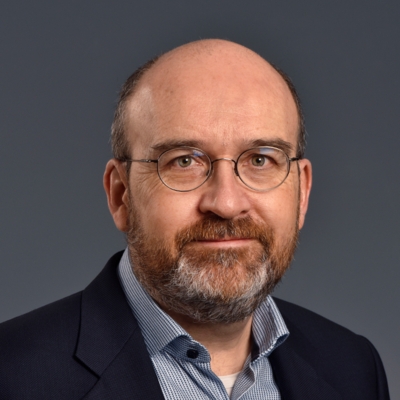
Head of Discovery Research
Fraunhofer ITMP (Germany)
Philip Gribbon, PhD, is the Head of Discovery Research at the Fraunhofer Institute for Translational Medicine and Pharmacology in Hamburg, Germany and Director General of the European Infrastructure for Chemical Biology (EU-OPENSCREEN). Previously, Gribbon served as Chief Scientific Officer of the European ScreeningPort, where he established small-molecule drug discovery and translational research platforms. He is highly engaged in advancing early drug discovery science, with >100 publications in the field, and has served on the SLAS Board of Directors, including a term as President in 2025.
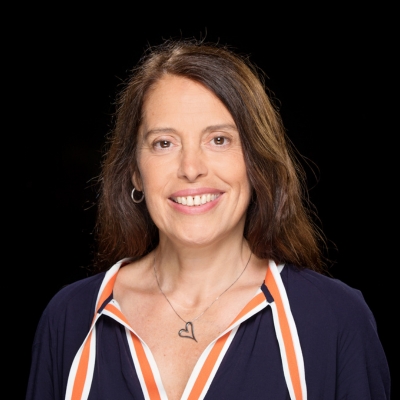
Professor for Cell Biology and in vitro Toxicology
University of Applied Sciences Northwestern Switzerland FHNW (Switzerland)
Laura Suter-Dick, PhD, is a full professor at the School of Life Sciences, University of Applied Sciences Northwestern Switzerland (FHNW), where she leads the group for Cell Biology and in vitro Toxicology since 2012. Suter-Dick is currently the vice president of the Swiss Society of Toxicology. She holds a PhD in biology, is a European Registered Toxicologist (ERT), and has extensive experience in the pharmaceutical industry, including 15 years at Roche.
Her field of research focuses on mechanistic toxicology, with a strong focus on advanced in vitro systems for liver, CNS and kidney. She strongly supports the 3Rs and new approach methodologies (NAMs) in toxicology. She is currently part of the ORION consortium, developing an AI-driven microfactory for personalized cancer therapy.
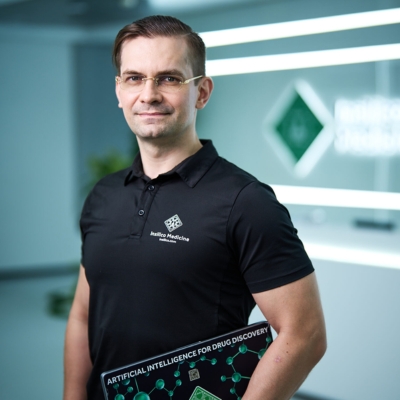
Founder, CEO and CBO
Insilico Medicine (United States)
Alex Zhavoronkov, PhD, is the founder, CEO and CBO of Insilico Medicine, a leading clinical-stage biotechnology company developing next-generation generative artificial intelligence and automation platforms for drug discovery. Since 2014, he has invented critical technologies in the field of generative artificial intelligence and reinforcement learning (RL) for the generation of novel molecular structures with the desired properties and the generation of synthetic biological and patient data. He also pioneered the applications of GANs, transformers, and other deep learning technologies for the prediction of human biological age using multiple data types, transfer learning from aging into disease, target identification, and signaling pathway modeling.
Prior to founding Insilico, he worked in senior roles at ATI Technologies (GPU company acquired by AMD). Since 2012, he has published over 310 peer-reviewed research papers with over 30 papers in the field of generative adversarial networks, generative reinforcement learning, and multi-modal transformers, and 3 books, including "The Ageless Generation: How Biomedical Advances Will Transform the Global Economy" (Macmillan, 2013). He serves on the advisory or editorial boards of Trends in Molecular Medicine, Aging Research Reviews, Aging, and Frontiers in Genetics, and founded and co-chairs the Annual Aging Research and Drug Discovery meeting (12th Annual in 2025), the world's largest event on aging research in the biotechnology industry. He is the adjunct professor of artificial intelligence at the Buck Institute for Research on Aging.
Session times and locations will be published in early 2027.
Track Chairs: Philipp Jaeger, PhD (Boehringer Ingelheim) and Stephan Pless, PhD (University of Copenhagen)
Emerging therapeutic modalities, novel target classes, and transformative advances in molecular design are revolutionizing drug discovery. This track will explore breakthroughs in tackling challenging biological targets, including GPCRs, ion channels, transporters, and other complex membrane proteins, as well as the growing impact of peptide therapeutics, macrocycles, and engineered biomolecules.
The sessions will showcase how innovations in artificial intelligence, advanced biophysical discovery and induced-proximity approaches are expanding the druggable universe, enabling access to previously intractable biology and accelerating the development of transformative therapeutics across modalities.
Track Chairs: Brinton Seashore-Ludlow, PhD (Karolinska Institutet) and Kilian Huber, PhD (University of Oxford)
Laboratory automation is rapidly evolving beyond traditional approaches to increase throughput, efficiency and reproducibility. This track will explore technologies and workflows that are changing how experiments are designed, executed and interpreted across the life sciences and drug discovery. Topics will span AI-driven and autonomous experimentation, scalable automation of complex biological models, high-dimensional and dynamic phenotyping, and automated approaches to chemical synthesis and molecular discovery.
Particular emphasis will be placed on approaches that connect these capabilities into integrated experimental workflows—from designing and making molecules, to testing them in biologically relevant systems, extracting information-rich phenotypes, and using the resulting data to guide the next experiment. Together, these advances are moving laboratory automation from fixed, high-throughput workflows toward more flexible, intelligent, and biologically sophisticated experimentation.
Track Chairs: Tilmann Buerckstuemmer, PhD (Myllia) and Federica Morandi, PhD (Roche)
This track will follow the path from target discovery to the clinic, focusing on technologies that bring research closer to human biology and patient outcomes. Leading academic and industry experts will guide attendees through key breakthroughs in scaling functional genomics screens beyond conventional cell lines into physiologically relevant systems. Sessions will explore how advances in complex cellular models are bridging the gap between high-throughput screening and human disease biology.
We will also examine the practical integration of AI and machine learning to streamline screening workflows and experimental design, emphasizing hands-on deployment, data quality and the ongoing role of human expertise. Additionally, next-generation liquid biopsy technologies: cutting-edge innovations that enable blood-based disease detection across oncology, neurodegenerative and cardiovascular fields.
Together, the sessions will show how human-relevant biology, scalable experimental systems and data-driven analysis are uniting to improve translation in drug discovery and diagnostics.