
25-27 May 2027
Hamburg, Germany
25-27 May 2027
Hamburg, Germany
Laboratory automation can substantially improve reproducibility, throughput, data quality, and scalability. However, many automation projects fail to deliver expected value because manual processes are insufficiently understood or standardized, technologies are selected in isolation, and data, quality, or regulatory requirements are addressed too late.
This interactive, vendor-neutral three-hour short course provides a structured approach for moving from a manual laboratory process to a viable automation concept. Through expert input, guided process-mapping exercises, a representative use-case, group discussions, and peer feedback, participants learn to analyze current workflows, prioritize automation opportunities and select appropriate technologies (liquid handling, robotics, sample logistics, scheduling, LIMS/ELN integration).
Those with little or no experience with laboratory automation and who are seeking an introductory overview of the topic, including:
No prior experience with a specific automation platform is required.
By the end of this course, participants will be able to:
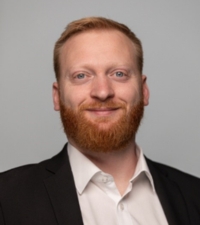
Richard Rösch
Head of nICLAS, Fraunhofer IPA
Richard Rösch holds a Master’s degree in Electrical Engineering and Information Technology from the University of Stuttgart and is a Project Manager and Researcher at Fraunhofer IPA. He also manages the Innovation Center for Laboratory Automation Stuttgart (nICLAS). His work focuses on developing innovative solutions in laboratory automation, laboratory robotics, liquid handling, and microfluidics, as well as translating manual laboratory workflows into automated processes.
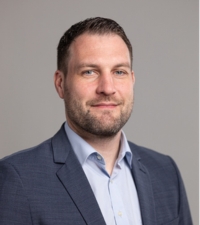
Stefan Scheuermann, PhD
Business Segment Manager Laboratory Automation & Co-Head of Center for Single-Cell Technologies, Fraunhofer IPA
Stefan Scheuermann holds a PhD in Biotechnology from Heidelberg University and is Business Segment Manager for Laboratory Automation at Fraunhofer IPA, as well as Co-Head of the Center for Single-Cell Technologies (LZ-EZT). His work focuses on developing innovative solutions in laboratory automation, robotics, and AI-driven laboratory processes for single-cell technologies, diagnostics, and biotechnological applications.
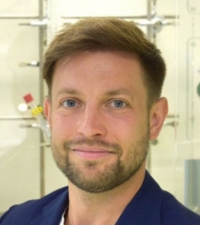
Felix Aberle, PhD
Manager Academy & Project Integration, Lab Automation Network Tübingen
Felix Aberle is a chemist and Head of the LAN Academy, which lays the foundations for laboratory automation and digitalization through structured teaching concepts. Previously, he led TüChemLab at the University of Tübingen for more than seven years, overseeing the establishment and development of teaching and learning laboratories. His expertise includes blended learning, 3D printing, biopolymers, and experiment development. During his tenure, he delivered more than 25 courses, workshops, and lectures in STEM education and supervised over 20 Bachelor’s and Master’s theses.