
19-21 May 2026
Vienna Congress & Convention Center
Vienna, Austria
19-21 May 2026
Vienna Congress & Convention Center
Vienna, Austria
The SLAS Europe 2026 Conference and Exhibition program will feature important tracks focused on life sciences and their global impact. Details on our Program Chairs and Keynote Speaker are below.
Special thanks to the SLAS Europe 2026 Program Chairs: James Pilling, MS (AstraZeneca) and Vivian Lu Tan, PhD (VBCF).

Associate Principal Scientist
AstraZeneca (England)
James Pilling, MS, is an associate principal scientist in Functional Genomics within Discovery Sciences at AstraZeneca. With over 20 years of experience in drug discovery, Pilling’s career encompasses the discovery and validation of novel targets, the development and implementation of innovative methods and technologies and the creation of disease-relevant cell models.
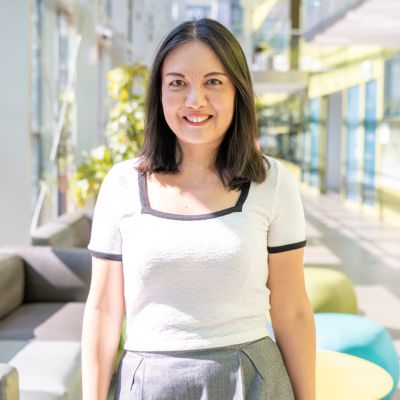
Managing Director
Vienna BioCenter Core Facilities (Austria)
Vivian Lu Tan, PhD, has a career spanning over 15 years, encompassing diverse roles in scientific research, project management and consultancy across academia and industry in the UK, Switzerland and Austria. Currently, Tan is the managing director of Vienna BioCenter Core Facilities (VBCF), where she oversees the delivery of cutting-edge scientific services that support the pioneering research conducted at the Vienna BioCenter, home to over 3,000 staff and scientists.
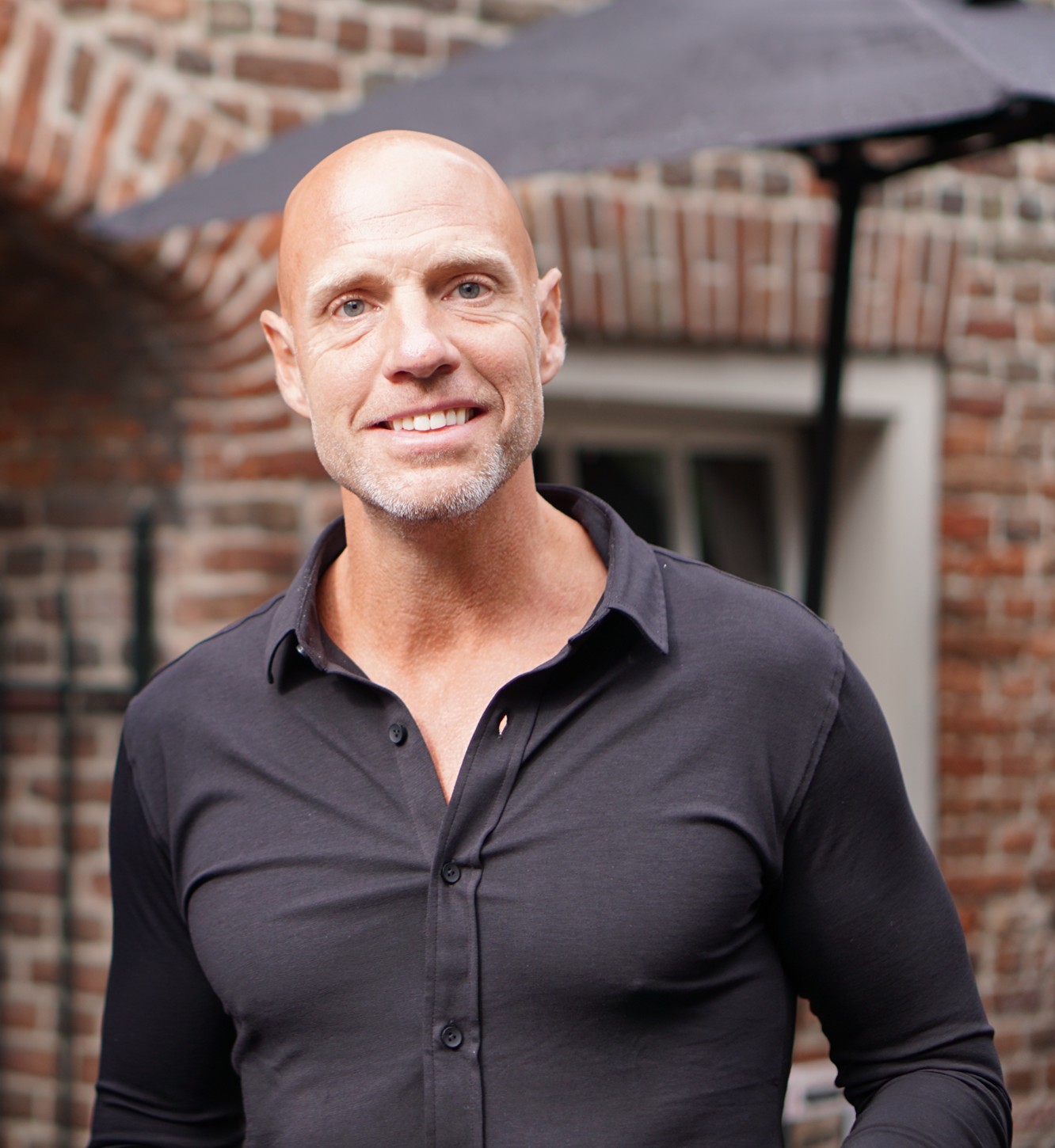
Professor of Precision Medicine
Radboud University Medical Center
Eindhoven University of Technology
Co-founder and Chief Scientific Officer
Trained Therapeutix Discovery
Co-founder
BioTrip.nl, Nanoworx
Willem Mulder, PhD, is a biomedical engineer, inventor and entrepreneur. He develops innovative, bioengineered nanomedicines and controlled-release systems for immunotherapy in cancer, inflammatory, and cardiovascular diseases, as well as to prevent allograft rejection in organ transplantation.
The SLAS Europe 2026 Conference and Exhibition program will feature important tracks focused on life sciences and their global impact. Details on our Program Chairs and Keynote Speaker are below. View the event scheduler for the session times and locations at the conference.
View Sessions in the Event Scheduler
Track Chairs: Davide Gianni, PhD (AstraZeneca) and Philipp Jaeger, PhD (Boehringer Ingelheim)
Innovative technologies, integrative approaches and emerging modalities are revolutionizing drug discovery. This track examines advancements in AI-driven drug design, spatial biology, multiomics, and RNA biology, highlighting their impact on accelerating timelines, enhancing precision, and addressing unmet medical needs.
Discussions will also cover strategies such as drug repurposing and systems pharmacology, highlighting how translational models and computational tools bridge the gap between discovery and patient treatment. The sessions will highlight how these approaches drive the identification of first-in-class targets, improve translational predictivity, and accelerate the development of transformative therapeutics across modalities.
Session 1: AI-Driven Drug Discovery: From Prediction to Precision
Session Chair: Xinyi Zhang, PhD (Aithyra)
Recent advances in computational modeling deliver predictive power that surpasses experimental measurement capabilities across biological scales, from protein structure and binding to single-cell perturbation effects, pathology image annotations, and genetic variant effects. Paired with high-throughput, multi-omic platforms, computational approaches that leverage large-scale datasets with diverse measurement modalities further bridge predictions and mechanistic insights across scales, enabling tissue- and patient-specific predictions of molecular interactions and therapeutic interventions. This session highlights computational advances with the potential to scale therapeutic discovery for precision medicine.
Session 2: Multiomics and Spatial Biology
Session Chair: Nina Corsini, PhD (IMBA)
Single cell and spatial omics technologies are revolutionising our ability to profile disease within the tissue context. This session aims to highlight how technological and computational advances in spatial biology are allowing us to scale experiments with impacts for understanding mechanisms of disease, allowing target and biomarker identification for patient stratification, and opening the door to precision medicine across disease indications.
Session 3: Drug Repurposing and Systems Pharmacology: Accelerating Therapeutic Innovation
Session Chair: Emre Guney, PhD (STALICLA)
Explore how drug repurposing and systems pharmacology converge to revolutionize therapeutic innovation. This session delves into leveraging existing drugs and computational models to uncover novel treatments, optimize efficacy, and reduce development timelines thus presenting opportunities for a systems-level approach to tackling unmet medical needs with speed and precision.
Session 4: RNA as an Emerging Target or Modality
Session Chair: Alessandro Bonetti, PhD (AstraZeneca)
This session will examine strategies for drug repurposing, utilizing systems pharmacology approaches. It will showcase examples where existing drugs are repurposed for new therapeutic areas, leveraging AI and computational models for prediction and discovery.
Track Chairs: Johanna Huchting, PhD (Fraunhofer ITMP) and Brinton Seashore-Ludlow, PhD (Karolinska Institutet)
The Advances in Laboratory Automation track features presentations by renowned experts and innovators at the forefront of leveraging advanced laboratory automation and IT. These technological advancements will drive scientific discovery by enhancing laboratory processes and the flow and analysis of high-quality data.
The increasing volume and complexity of data generated from manifold screening technologies, omics and sample management have catalyzed the development of cutting-edge algorithms rooted in big data analytics and machine learning/artificial intelligence. From self-driving experiments to scalable, complex biological models, attendees can expect to gain valuable insights into the utilization of the latest laboratory automation and IT breakthroughs that have the potential to revolutionize their businesses and streamline their processes.
Session 1: Next-Gen Discovery: Emerging Cellular & Biophysical Technologies
Session Chair: Agnieszka Konopacka, PhD (Institute of Cancer Research Centre for Protein Degradation)
Increasingly complex biological targets and innovative drug modalities require ultra-sensitive technologies able to detect weak and transient interactions, capture dynamic processes in real-time, and interrogate target structure to power translation. This session will explore how innovative cellular and biophysical methods accelerate the development of diverse therapeutics, including proximity-based modalities.
Session 2: From Patient Samples to Precision Medicine: Building the Infrastructure for Translational Research
Session Chair: Sonia Houghton (Sonia Houghton Consulting)
High-quality biological samples are the foundation of translational research and personalised healthcare. As studies expand to larger patient cohorts and increasingly data-rich analytical platforms, maintaining sample integrity, traceability, and scalability across the research workflow becomes critical. This session explores the ecosystem that supports modern biomedical discovery—from patient cohort sampling and biospecimen acquisition through to large-scale storage infrastructure and advanced analytical technologies. Speakers will highlight how coordinated approaches to sample management, research infrastructure, and emerging diagnostic platforms enable more reliable and scalable discovery, bridging the gap between patient-derived samples and precision diagnostics to support more predictive, data-driven research.
Session 3: Automating Drug Discovery in 3D Models
Session Chair: Robin Pronk, PhD (BrainZell)
As 3D cell culture, organoids, and complex co-culture systems become increasingly central to drug discovery and disease modeling, laboratories face new challenges in scalability, reproducibility, and integration with high-throughput workflows. This session highlights how advances in laboratory automation, robotics, liquid handling, and imaging are transforming the use of physiologically relevant models in research and development. Presentations will showcase innovative strategies for handling fragile 3D structures, adapting assay design for miniaturized and multiplexed readouts, and integrating multi-omics and biophysical measurements with automated platforms. Attendees will gain insight into how automation is bridging the gap between model complexity and experimental throughput, enabling more predictive, data-rich discovery pipelines.
Session 4: Digitalization of Molecular Discovery
Session Chair: Yao Fehlis, PhD (KUNGFU.AI)
The integration of automation, agentic AI, and advanced data analytics is redefining molecular and drug discovery. By establishing iterative feedback loops between computational models and automated laboratory systems, these technologies significantly accelerate the design–make–test–analyze (DMTA) cycle. This session will examine recent advances that enable closed-loop experimentation — from computational frameworks that interpret the complex languages of chemistry and biology to predictive modeling and exploration of ultralarge chemical spaces to the autonomous execution and interpretation of laboratory experiments. Together, these innovations are laying the foundation for fully digitalized, self-driving discovery platforms.
Track Chairs: Fernando Ramon-Olayo, PhD (Servier) and Tilmann Buerckstuemmer, PhD (Myllia)
This track aims to provide a clear perspective on the evolving landscape of screening applications and diagnostics, particularly in light of recent advances in AI-assisted drug discovery and development. Renowned experts and innovators will guide us through the latest technologies and breakthroughs shaping key topics, such as perturbation screening, biologically relevant models and assays, spatial multiomics, comprehensive biomarker profiling, and molecular diagnostics.
Additionally, the role of AI and machine learning in streamlining target and lead discovery and addressing global challenges will be explored. We will delve into integrating these technologies into new patient-centric testing paradigms. Attendees can expect to gain unique insights into cutting-edge innovations as experts highlight key trends to watch in the years to come.
Session 1: Perturbomics as a Powerful Tool to Discover New Targets, Leads and Biomarkers
Session Chair: Kilian Huber, PhD (University of Oxford)
Perturbation screens have become a cornerstone for uncovering novel biological insights with direct translational impact. By systematically disrupting genes, pathways, or cellular states, these approaches reveal previously hidden targets, validate mechanisms, and identify predictive biomarkers. Their versatility spans from early-stage discovery of druggable nodes to generating leads that accelerate therapeutic pipelines. This session will showcase cutting-edge applications of perturbation screening in both academic and industry settings, highlighting how these tools are reshaping the way we discover and develop new interventions.
Session 2: Improving Physiological Relevance of Models and Predictive Value of Assays
Session Chair: Fernando Ramon-Olayo, PhD (Servier)
Improving the physiological relevance of models is central to bridging the gap between experimental systems and human biology. More predictive assays not only reduce late-stage failures but also accelerate the translation of discoveries into effective therapies. Advances in complex cell systems, 3D cultures, organoids, and integrated assay platforms are driving this shift. This session will highlight innovations that enhance both model fidelity and prediction reliability across academic and industrial research.
Session 3: Capturing Heterogeneity: Biomarker Signatures from Complex Data
Session Chair: Andre Rendeiro, PhD (CeMM Research Center for Molecular Medicine of the Austrian Academy of Sciences)
Biological heterogeneity is both a challenge and an opportunity in understanding disease and treatment response. Advances in high-dimensional technologies generate complex datasets that capture this variation at the molecular, cellular and patient levels. Extracting meaningful biomarker signatures from such data is key to precision medicine, enabling better stratification and prediction of clinical outcomes. This session will explore strategies and case studies where heterogeneity is harnessed to define actionable biomarkers in academic and industry contexts.
Session 4: New Tools for Improving Antimicrobial Preparedness (ELRIG Sponsored Session)
Session Chair: Tilmann Buerckstuemmer, PhD (Myllia Biotechnology)
The threat of the emergence of new pathogens or multi-resistant forms of known ones remains one of the most important health challenges. Recent pandemics have demonstrated the power of aligning all the living forces of innovation to produce an adequate response in a short time. In contrast, both public and private investment in this arena are challenging. This session will focus on the advancements to enhance diagnostics and accelerate the discovery of new therapeutic solutions for infectious diseases.