January 30 - February 3, 2027
San Diego, CA, USA

January 30 - February 3, 2027
San Diego, CA, USA
We're excited to head back to San Diego for SLAS2027. For details on our Program Chairs and Educational Tracks, see below.
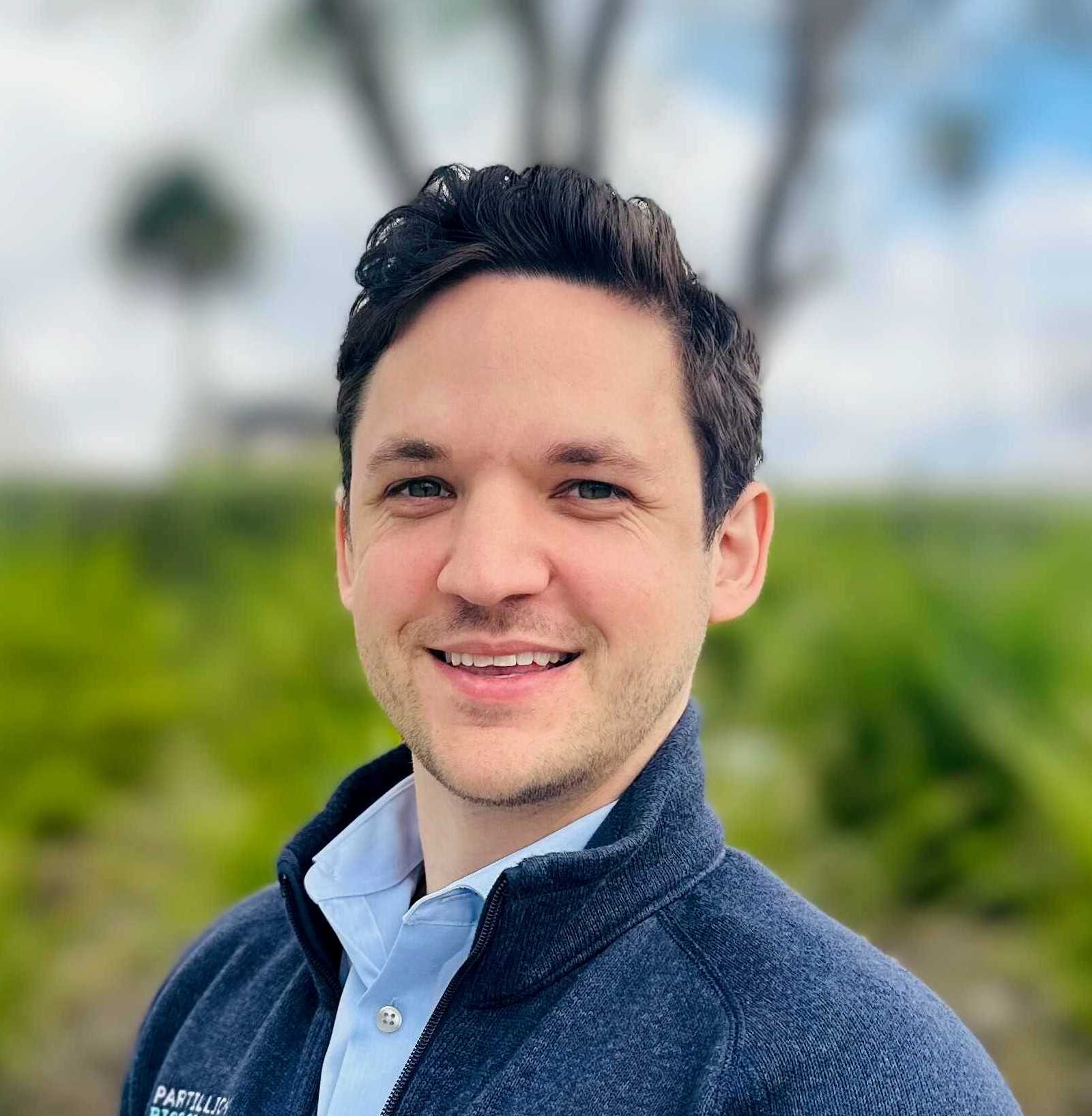
Co-Founder and CEO
Partillion Bioscience
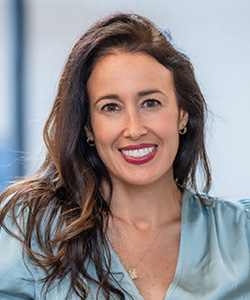
Joe de Rutte, PhD, is the co-founder and CEO of Partillion Bioscience, where he leads the development of innovative tools that advance single-cell analysis and next-generation therapeutics. A recipient of the 2020 SLAS Innovation Award for the Nanovial platform, de Rutte helped transform the technology from an academic breakthrough into commercial tools now supporting more than 100 research programs worldwide. He is an inventor on 12 filed patents, co-author of 21 peer-reviewed publications and remains an active member of the SLAS community through award judging and conference program leadership.
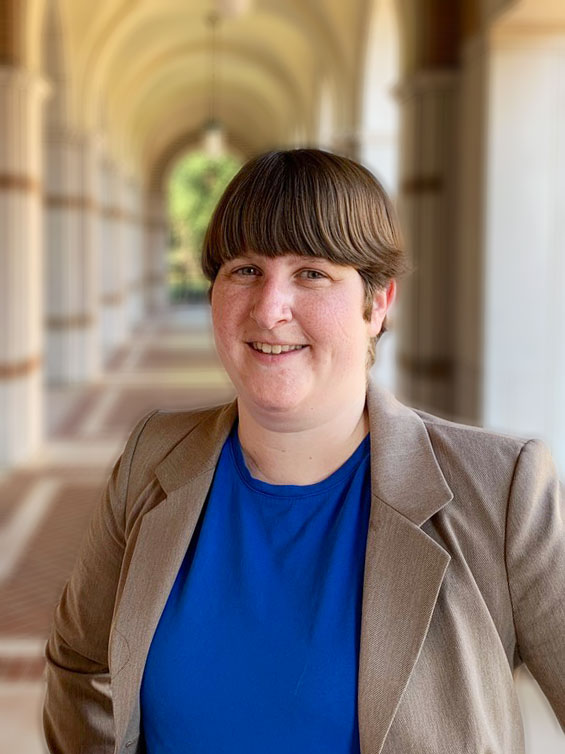
Director, Microtechnologies Laboratory for Pediatric Oncology
Rice University
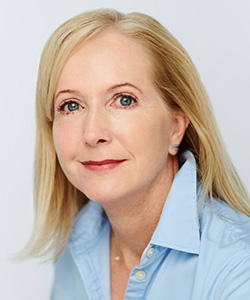
Julea Vlassakis, PhD, directs the Microtechnologies Laboratory for Pediatric Oncology at Rice University (Houston, TX, USA), where she leads the advancement of targeted and precision therapies for pediatric cancers, with a focus on Ewing sarcoma. She earned her PhD in bioengineering as a National Science Foundation Graduate Fellow and postdoc in the Herr Lab at the University of California, Berkeley, where she was the second recipient of the SLAS Graduate Education Fellowship Award. Her research has garnered several honors, including the NIH Director’s New Innovator Award, Burroughs Wellcome Fund Career Award at the Scientific Interface, and the CPRIT Scholar Award from the Cancer Prevention & Research Institute of Texas.
Podium presentations at SLAS2027 are organized into eight educational tracks. Track and session titles and descriptions and names of track chairs and session chairs follow below.
The Scientific Program Committee selects speakers based on the innovation, relevance and applicability of research. If your proposed topic does not squarely fit into the focus of one of these tracks, please submit it for committee consideration regardless. The committee members use their judgment and experience to select presentations that best address the interests and priorities of today’s life sciences discovery and technology community.
Samantha Peel, PhD (AstraZeneca) and Caitlin Mills, PhD (Harvard Medical School)
This track will highlight recent innovations in assay development and screening, spanning novel technologies, creative assay design, and impactful screening strategies. Presentations will focus on approaches aligned with next-generation therapeutic modalities and emerging mechanisms of action, addressing the challenges of more complex and less tractable targets. The role of AI in transforming assay development will be explored, including the move toward prediction-first and data-driven design. Through practical case studies, speakers will showcase state-of-the-art cellular, biochemical, and biophysical assay platforms deployed in model systems of increasing biological complexity.
Track Chairs: Tim Dawes, PhD (TD Process Consulting) and Zoe Hughes-Thomas, PhD (GSK)
Automated process workflows underpin chemical and biological research, enabling both small and large molecule discovery and broader scientific advances. This track will share updates from the past year since SLAS2026 and explore emerging opportunities to improve productivity, data quality, and automation reliability. As automation expands further into laboratory execution, experimental design, and data analysis, sessions will examine the evolving role of scientists and technologists, including career pathways for automation and technology professionals. Real-world case studies will highlight successful implementations, challenges encountered, and practical lessons learned.
Track Chairs: Dennis Plenker, PhD and John Hickey, PhD (Duke University)
Attendees will learn from industry and academic leaders driving the next generation of cellular technologies for drug discovery, translational research, and precision medicine. This track spotlights how patient-derived cell models and New Approach Methodologies (NAMs) — including organoids, spheroids, co-cultures, and microphysiological systems — are providing more human-relevant, translationally predictive alternatives to traditional preclinical models across oncology, neuroscience, metabolic disease, and beyond.
Sessions will explore how these platforms are applied across the discovery and development process: from PK/PD and mechanism-of-action studies, to perturbation screens that move beyond classical dose-response and connect drug effects to cellular states and tissue-level phenotypes. Attendees will also gain insight into the rapidly maturing field of Functional Precision Medicine, where ex vivo drug response platforms built on patient-derived cells are being translated toward real-world clinical decision-making and patient-tailored therapy.
Whether you are developing novel preclinical models, designing perturbation screens to uncover mechanisms of response and resistance, or building functional assays to guide individual treatment decisions, this track offers practical frameworks, emerging data, and the cross-disciplinary connections needed to advance human-relevant biology from bench to bedside.
Peter McLean, PhD (Recursion) and Paul Jensen, PhD (University of Michigan)
The life sciences industry has officially moved past exploratory pilots and entered a period of industrial-scale integration and operational maturity. Making meaningful progress in 2027 demands moving beyond mere prediction toward the implementation of prescriptive, mechanistic, and causal-aware systems capable of navigating astronomical biological and chemical complexity with minimal human intervention.
This track brings together technical experts to address the "generalization gap" in biological and chemical AI and facilitate the integration of computational power with biological reality. We will delve into critical technical frontiers encompassing mechanistic "gray-box" models, the deployment of multi-scale digital twins, and the realization of self-driving laboratories orchestrated by Large Action Models. Join fellow scientists and engineers for technically grounded discussions on scaling autonomous discovery, ensuring biological plausibility, and navigating the new regulatory landscape established by the FDA and EMA.
Track Chairs: Sumita Pennathur, PhD (University of California, Santa Barbara) and David Huber, PhD (Injectsense Inc)
Micro- and nanotechnologies have become ubiquitous in biological and medical research because of their ability to control and interrogate environments at the scales of individual molecules, single cells, and more complex biological models (e.g., organoids). They have enabled new measurement modalities and innovative platforms that deliver greater precision, higher throughput, and previously inaccessible data, driving exciting discoveries across the life sciences. Although the adoption of these technologies in commercial workflows continues to grow, integrating them into established systems remains challenging. This track showcases both breakthrough discoveries from fundamental research and emerging micro- and nanotechnologies with the potential to advance lab automation and screening, as well as demonstrated nano/microtechnologies making the leap from research to real-world application. Together, these examples illuminate the path from research innovation to commercial impact.
Track Chairs: Amit Vaish, PhD (Amgen) and Matthew Calabrese, PhD (Pfizer)
Developing therapies for debilitating diseases with undruggable or intractable targets requires moving beyond traditional occupancy-driven pharmacology. This track highlights event-based strategies such as targeted protein degradation, alongside advances in AI/ML-enabled drug discovery and emerging modalities including RNA-based therapeutics and antibody–drug conjugates, to enhance efficacy and therapeutic index.
Track Chairs: Yang Xiao, PhD (University of Michigan) and Ramy Elgendy, PhD (AstraZeneca)
Single-cell and spatial omics are transforming our understanding of health and disease by revealing how individual cells and the microenvironment organize, interact, maintain, and evolve within tissues. This track will highlight innovations in spatial omics technologies, functional genomics, cross-modal integration, cross-scale integration, with applications in diagnostics, therapeutics, and precision medicine. Highlights will be given to breakthroughs in epigenomics and proteomics, as well as scalable AI-based foundation models in data-driven drug discovery and high-content target identification and validation.
Track Chairs: Franck Madoux, PhD (Amgen) and Tijmen Booij, PhD (Ombion CPBT)
This track highlights advances in biomarker discovery, validation, and measurement across animal models, NAMs, and patient-derived samples. Topics include high-throughput and automated profiling, phenotypic and molecular signatures, and analytical approaches that connect biological readouts to disease understanding and patient outcomes. Sessions will emphasize translational use cases, including patient stratification, personalized medicine, treatment response monitoring, and the integration of biomarker endpoints into clinical trials and healthcare decision-making.
Session Chair: David Rimmer, B.Sc. (GSK)
The current trends in Sample Management prioritize end-to-end automation, streamlined workflows, and integration across multiple systems to improve reproducibility, data traceability, and operational efficiency. AI/ML is increasingly seen as a tool for addressing key challenges such as sample shortages, tracking, error recovery, and high-throughput processing. However, barriers such as unclear use-cases, resource constraints, and technical integration remain. Emerging modalities and expanding sample libraries further intensify the need for efficient long-term storage solutions and strategic orchestration.